Introduction
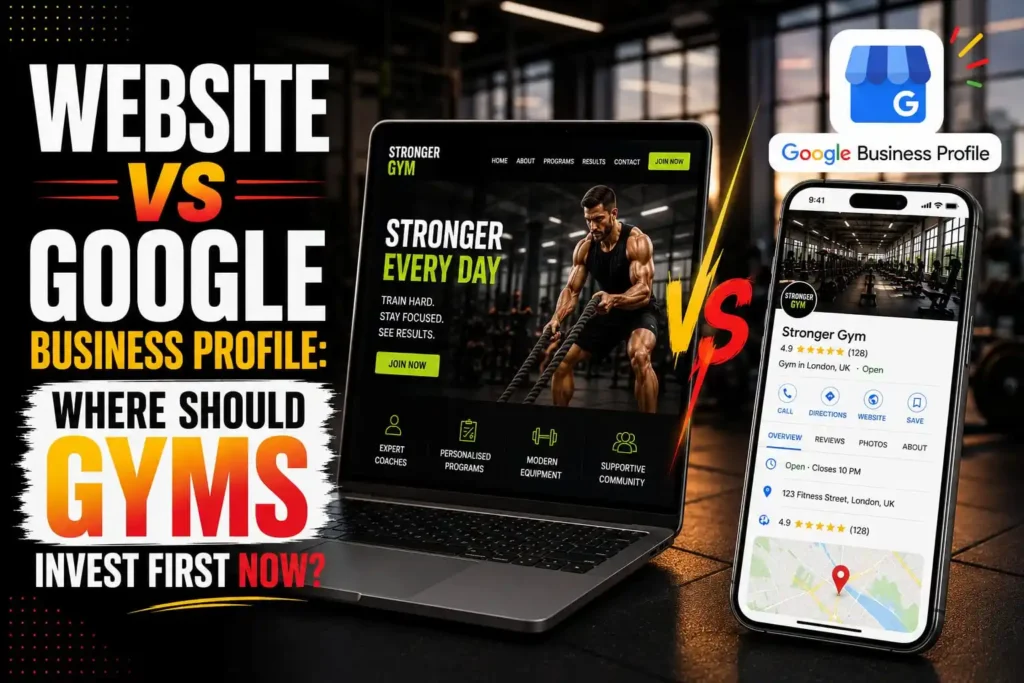
For gym owners, deciding where to invest first can be challenging when both a website and Google Business Profile can influence local visibility and member acquisition. Website vs Google Business Profile is an important comparison for fitness businesses that want to attract nearby customers, build credibility, and generate more inquiries. At abdulqadeer.click, we explore the strengths of both platforms and explain how gyms can prioritize their digital marketing budget.
A well-optimized profile can help your gym appear in local searches, while a strong website can provide detailed services, pricing, membership information, and conversion opportunities. Understanding Website vs Google Business Profile can help you choose the right starting point based on your goals and current online presence. This guide breaks down Website vs Google Business Profile so gym owners can make a smarter investment decision and build a stronger local SEO foundation.
This post breaks down the gym website vs Google Business Profile question in plain terms. No jargon. No vague advice. Just a clear path for gyms in the UK, the UAE, and anywhere else members search on their phones before they search anywhere else.
Why This Question Even Exists
Ten years ago, a website was the only digital asset that mattered. You built a site, you did some SEO, and people found you through Google search results that pointed straight to your homepage.
That has changed. Google now answers most local questions directly inside its own search results and maps. Someone typing “gym near me” often never clicks through to a website at all. They see a map pack, three gyms, star ratings, opening hours, and a call button. They pick one and they call.
This shift is why so many gym owners now ask whether a website is even worth the spend. The honest answer is that both assets do different jobs. Confusing those jobs is what causes wasted budget.
What A Google Business Profile Actually Does
A Google Business Profile, often still called Google My Business by older guides, is your free listing on Google Search and Google Maps. It shows your gym name, address, phone number, opening hours, photos, reviews, and posts.
For local searches, this listing often appears before any website does. Someone searching “24 hour gym Manchester” or “ladies only gym Dubai” will usually see the map pack first. That is prime space, and it costs nothing to claim.
A strong Google Business Profile helps with:
- Appearing in the local map pack for nearby searches
- Building trust through star ratings and reviews
- Giving quick facts like hours, price range, and location
- Letting people call or get directions without leaving Google
- Supporting local SEO signals that Google uses for ranking
This is why so many gym marketing strategy UAE campaigns start here. Dubai and Abu Dhabi have dense gym competition packed into small areas. A gym without a claimed, optimised profile is invisible next to competitors who have one.
What A Gym Website Actually Does
A website is the only digital asset you fully control. Google can change its algorithm, its layout, its features, at any time. Your website stays yours.
A gym website handles jobs that a Google listing simply cannot do well:
- Explaining your full range of classes, memberships, and pricing tiers
- Showing trainer profiles and credentials in depth
- Hosting a booking system or free trial form
- Running blog content that targets long tail keywords
- Collecting email addresses through lead magnets
- Building retargeting audiences through pixels and tracking
- Giving you a home for paid ad campaigns to send traffic to
Google Business Profile gets people to notice you. A website gets people to trust you and act. Different jobs, different values.
The Head to Head: Gym Website vs Google Business Profile
Here is the comparison stripped down to what actually matters for a gym owner deciding where to spend first.
Cost. Google Business Profile is free. A website has upfront cost and ongoing maintenance.
Speed to results. A profile can start showing in local search within days. A website takes longer to rank, often months, unless paid ads are used.
Control. You fully control a website. Google controls the profile layout, features, and rules.
Depth of information. A website can hold unlimited pages, pricing, and content. A profile has limited fields and short post formats.
Lead capture. Websites can run proper forms, chatbots, and booking tools. Profiles mostly send people to click to call or click to visit.
Trust building. Both matter here. Reviews on the profile build trust fast. A polished website builds trust through design, content, and proof like testimonials and results.
Long term asset value. A website is an asset you can sell, expand, and use across every channel. A profile is a listing you rent from Google.
So Which One Wins? Neither, But One Comes First
The gym digital marketing priorities answer is not either or. It is sequencing.
For a brand new gym with a tight budget, the honest priority order is:
- Claim and fully optimise the Google Business Profile
- Build a simple, fast, mobile friendly website with clear calls to action
- Layer in ongoing SEO content and paid ads once both are solid
Here is why this order makes sense.
Reason One: Local Search Behaviour
Most gym searches are local intent searches. People search from their phone, often standing outside, deciding where to go tonight or tomorrow morning. Google Business Profile is built exactly for this moment. It answers the immediate question: is this gym open, is it close, is it good.
A website cannot compete with the map pack for this kind of instant decision making. Ignoring the profile means losing this entire slice of demand before a website ever gets a chance.
Reason Two: Speed And Cost
New gyms often have cash tied up in equipment, rent, and staff. The marketing budget is thin. A free, well optimised profile gives an immediate return with zero spend. That buys time to build a proper website without rushing it or cutting corners.
Reason Three: Trust Signals Come First
Reviews on a Google Business Profile carry huge weight for a fitness business online presence. People trust other members before they trust marketing copy. A gym with fifty genuine five star reviews and a basic website will often out convert a gym with a beautiful website and three reviews.
Reason Four: The Website Still Needs To Exist
None of this means skip the website. Once the profile is generating enquiries, those enquiries need somewhere proper to land for deeper research. A website closes the loop that a profile opens.
Gym Lead Generation UK: What Actually Works Right Now
The UK fitness market is competitive and price sensitive. Members compare monthly fees, contract terms, and location convenience closely before committing.
For gym lead generation UK campaigns, the winning formula combines both assets working together:
Step one. Optimise the Google Business Profile with accurate categories, service areas, updated photos, and a steady stream of reviews. Respond to every review, good or bad, since responses show active management.
Step two. Use Google Posts inside the profile to promote free trials, open days, or seasonal offers. These posts appear directly in search results.
Step three. Point the profile’s website link to a dedicated landing page, not just the homepage. A landing page built for one offer converts far better than a generic homepage.
Step four. Track calls and clicks through Google’s own insights to see which searches actually bring in enquiries.
Step five. Use the website for retargeting. Someone who visits but does not book can be shown ads later, reminding them to come back.
This combined approach consistently outperforms gyms that only invest in one channel.
Gym Marketing Strategy UAE: A Different Kind Of Competition
Gym marketing strategy UAE needs to account for a market shaped by expats, high mobility, and intense local competition in cities like Dubai, Abu Dhabi, and Sharjah.
A few things matter more here than in slower markets:
Multilingual content. Many members search in English but some search in Arabic. A website and profile that support both reach more of the market.
Visual proof. UAE gym seekers respond strongly to video content, facility tours, and influencer style reviews. Photos on the Google Business Profile need to be current and high quality.
Membership transparency. Many UAE gyms hide pricing until a call or visit. Gyms that show clear pricing on their website often build more trust with an audience used to comparing several options quickly online.
Location clarity. With many gyms inside malls, towers, and compounds, accurate map pins and clear directions inside the Google Business Profile reduce lost enquiries from people who cannot find the entrance.
The gym digital marketing priorities in the UAE still follow the same sequence as the UK. Claim and polish the profile first, then build a website that supports faster decision making with clear pricing and visuals.
Gym Website Conversion Optimisation: Turning Visitors Into Members
A website with traffic but no conversions is a wasted opportunity. Gym website conversion optimization focuses on removing friction between a visitor landing on a page and taking action.
Key elements that actually move the needle:
One clear call to action per page. Do not offer five different buttons. Pick one goal per page, whether that is book a free trial, call now, or download a pricing guide.
Fast load speed. Gym websites often carry heavy images and videos. Compress everything. A slow site loses visitors before they even see the offer.
Mobile first design. Most gym searches happen on a phone. If a form is hard to fill on mobile, the enquiry is lost.
Social proof near the call to action. Placing a testimonial or review count directly next to a booking button increases trust at the exact moment a decision is being made.
Simple forms. Asking for ten fields before a free trial booking kills conversions. Name, phone number, and preferred time is often enough.
Live chat or WhatsApp button. Many gym enquiries are quick questions. A live chat option captures leads who would otherwise leave without contacting anyone.
Clear pricing or a pricing range. Hidden pricing creates hesitation. Even a starting price builds trust and filters in serious enquiries.
Small changes here often produce bigger results than large increases in traffic. A gym doubling its conversion rate gets the same growth as doubling its traffic, without spending more on ads.
Building A True Fitness Business Online Presence
A fitness business online presence is bigger than a website and a profile. It includes social proof spread across the internet, consistent business information, and a presence wherever potential members might look.
A complete presence includes:
- A claimed and fully filled Google Business Profile
- A fast, clear, mobile friendly website
- Active social media profiles linked from both
- Listings on fitness specific directories where relevant
- Consistent name, address, and phone number everywhere online
- A steady flow of new reviews across platforms
Consistency across all of these builds the kind of trust that search engines and people both respond to. Search engines reward businesses that appear reliable and well established across the web. People respond to gyms that look active, current, and popular.
A Practical Roadmap By Gym Stage
Brand new gym, tight budget. Claim the Google Business Profile fully. Get the first twenty reviews from founding members. Build a simple five page website: home, services, pricing, about, contact. Point the profile link to this site.
Established gym, steady membership. Refresh the website with proper conversion optimisation. Add a blog targeting local search terms. Run Google ads pointing to dedicated landing pages, not the homepage.
Multi location gym or franchise. Build a Google Business Profile for every location. Create location specific pages on the website. Centralise review management so no location falls behind.
Gym looking to scale fast. Invest in both channels equally. Use paid search and social ads to drive traffic to a website built specifically for conversion. Use the profile to capture nearby, ready to convert searches at the same time.
At every stage, the two assets should work as a pair rather than compete for budget.
Common Mistakes Gyms Make With This Decision
Mistake one: building an expensive website before claiming the profile. This wastes the fastest, cheapest win available.
Mistake two: leaving the profile unmanaged after claiming it. An unanswered review or outdated hours damages trust more than having no profile at all.
Mistake three: sending all profile traffic to a generic homepage. A dedicated landing page for the specific offer being promoted converts far better.
Mistake four: ignoring mobile experience. Most enquiries happen on a phone. A website that only looks good on a desktop screen loses members before they even see the offer.
Mistake five: treating this as a one time project. Both the website and the profile need ongoing attention. Reviews need responses. Content needs updates. Pricing needs to stay current.
Where To Go Deeper
For gyms wanting a clear breakdown of how Google ranks local businesses, Google’s own guidance on local search and Business Profiles remains one of the most reliable sources available, since it comes directly from the platform making the rules. Reading through their official help documentation is a solid way to understand how categories, reviews, and photos affect visibility.
For more thinking on how digital marketing strategy applies specifically to fitness and gym businesses, further breakdowns and case studies are shared on Medium, covering practical approaches beyond what fits in a single blog post.
Final Answer: Where Should Gyms Invest First?
Start with the Google Business Profile. It is free, fast, and matches exactly how people search for a gym nearby. Get it fully optimised, collect real reviews, and keep it active.
Then build a proper website, even a simple one, focused on clear pricing, fast load times, and one strong call to action per page. Use it to capture the trust that the profile starts to build.
This is not a competition between two tools. It is a sequence. Get the order right, and both assets work together to bring in members instead of pulling the budget in two directions.
If working out this sequence for your own gym feels like a lot to plan alone, a full breakdown of services built specifically for fitness businesses is available on the gym digital marketing services page. For a direct look at where your gym currently stands, a free audit call is the fastest way to get clear, specific answers rather than general advice.
You can also explore more on the home page for a wider view of what a proper gym marketing setup looks like from the ground up.
Frequently Asked Questions
Should a gym invest in a website or Google Business Profile first?
A gym should claim and fully optimise its Google Business Profile first, since it is free and matches how most local gym searches happen. A website should follow soon after to support deeper research and conversion.
Is Google Business Profile enough on its own for a gym?
No. A profile handles local visibility and quick decisions, but it cannot hold detailed pricing, class schedules, booking systems, or long form content the way a website can.
How much does a gym website cost compared to a Google Business Profile?
A Google Business Profile is free to claim and manage. A website has upfront design and development costs, plus ongoing hosting and maintenance, though a simple version can be built affordably.
What matters most for gym lead generation in the UK?
A combination of an optimised Google Business Profile, genuine reviews, and a website landing page built around a specific offer tends to produce the strongest results for UK gym lead generation.
Does gym marketing strategy differ between the UK and UAE?
The core sequence stays the same, but UAE gym marketing strategy often needs multilingual content, stronger visual proof, and clearer location detail due to higher competition and a more mobile, expat heavy audience.